Supporting patients & care teams in navigating PMOS with patient-centered, compassionate care & resources.
Polyendocrine Metabolic Ovary Syndrome (PMOS), formerly known as Polycystic Ovary Syndrome (PCOS), is a hormonal disorder that affects approximately 1 in 10 women, yet up to 75% of people with PMOS are undiagnosed. The “Partnering to Navigate PMOS” team is working to support patients and care teams to better diagnose, manage, and support people living with PMOS. Our team has co-developed tools to understand and manage PMOS.
PCOS was renamed PMOS in Spring 2026. Our team is working on updating our materials and webpages to reflect this change.



We aim to help patients and providers streamline diagnoses and care for PMOS. We teamed up with young adults to co-develop PMOS informational tools and patient support guides. We partnered with health systems to streamline diagnosis and support providers in caring for their patients.
For Healthcare Teams
Through a grant from the US Department of Health and Human Services, Dr. Narges Farahi and partners at UNC and Piedmont Health Services are designing and testing a new way to provide care to people with Polyendocrine Metabolic Ovary Syndrome (PMOS).

“Partnering to Navigate PMOS” is a multidisciplinary team striving to co-develop patient-centered educational tools for consumers and training support for their care teams.
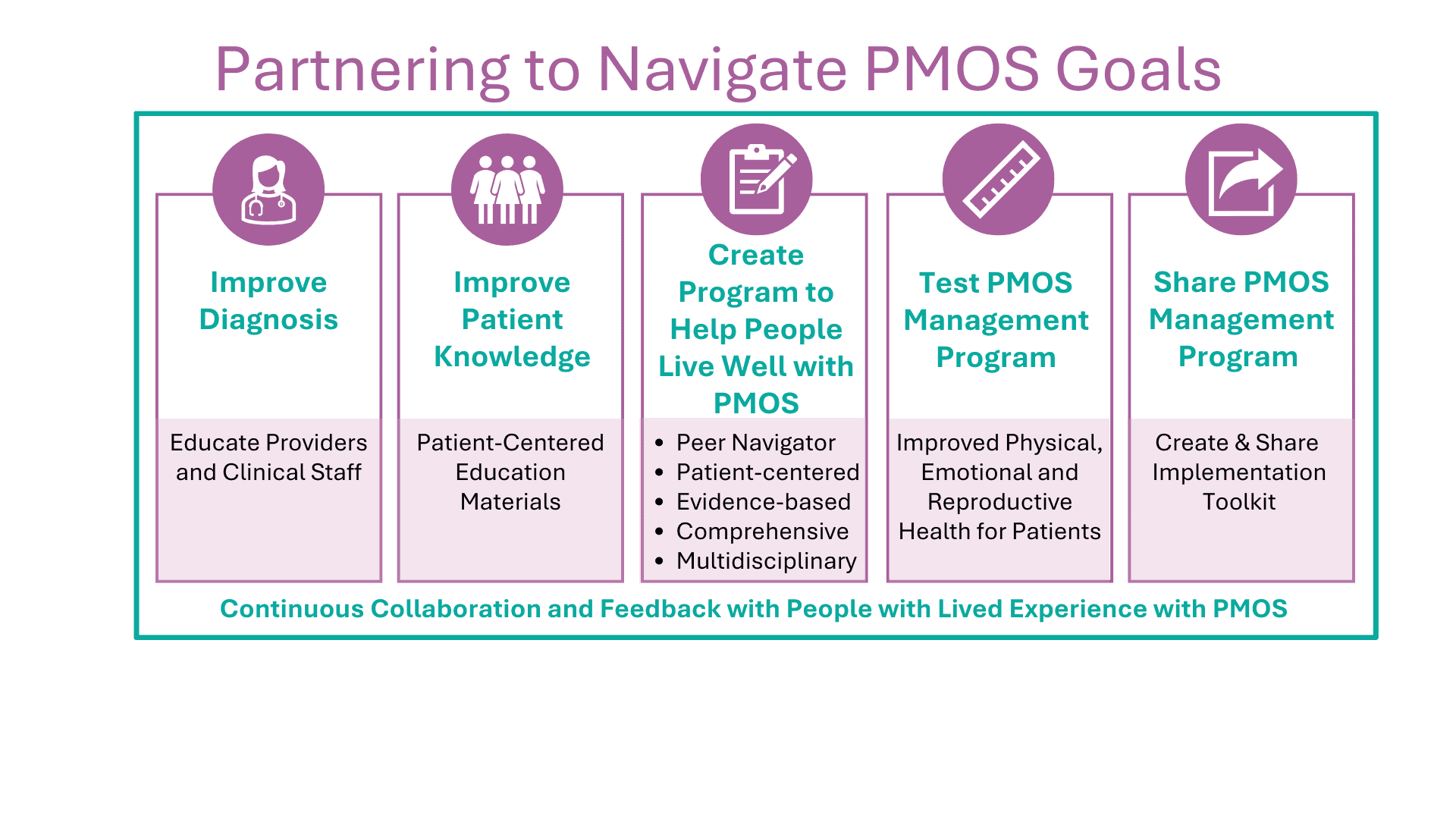
About the Study: The Partnering to Navigate Polyendocrine Metabolic Ovary Syndrome (PMOS) study engages patient and clinical partners to develop a comprehensive, multidisciplinary PMOS management program in an FQHC setting in the South, where patients experience disparities in chronic condition detection, treatment and pregnancy outcomes.
Partnering PMOS Team: The leadership team includes principal investigator Narges Farahi, MD, MPH, from UNC Family Medicine, and an interdisciplinary group of co-investigators with expertise in implementation science, chronic conditions, reproductive health, family medicine, health equity, maternal and child health, and community engagement/community-based participatory research. This group includes Rachel Urrutia, MD, MSCR, of UNC Obstetrics and Gynecology; Jean Dostou, MD; and Maya Styner, MD, of UNC School of Medicine; Ceshae Harding, MD of Wake Forest Baptist Medical Center; Sarah Verbiest, DrPH, MSW, MPH, clinical professor in the UNC School of Social Work and executive director of the Collaborative for Maternal and Infant Health in the UNC School of Medicine; Erin McClain, MPH, MA; and Jaimie Lea, MPH, IBCLC, of the UNC Collaborative for Maternal and Infant Health. The Partnering to Navigate PMOS team includes a patient advisory board to guide patient and community elements of the work, as well as teams of clinic champions.
You can learn more about the work and team here.
Let’s normalize finding quality PMOS treatment, support, and management.
Wolf WM, Wattick RA, Kinkade ON, Olfert MD. Geographical Prevalence of Polycystic Ovary Syndrome as Determined by Region and Race/Ethnicity. Int J Environ Res Public Health. 2018;15(11):2589. Published 2018 Nov 20. doi:10.3390/ijerph15112589.
Partnering to Navigate PMOS, 2026.